NHỮNG CHIẾC BÀN TRONG LÒNG (Ga 2,13-22)
Jn 2:13-22 (Jn 2:13-22)
Bài Phúc Âm
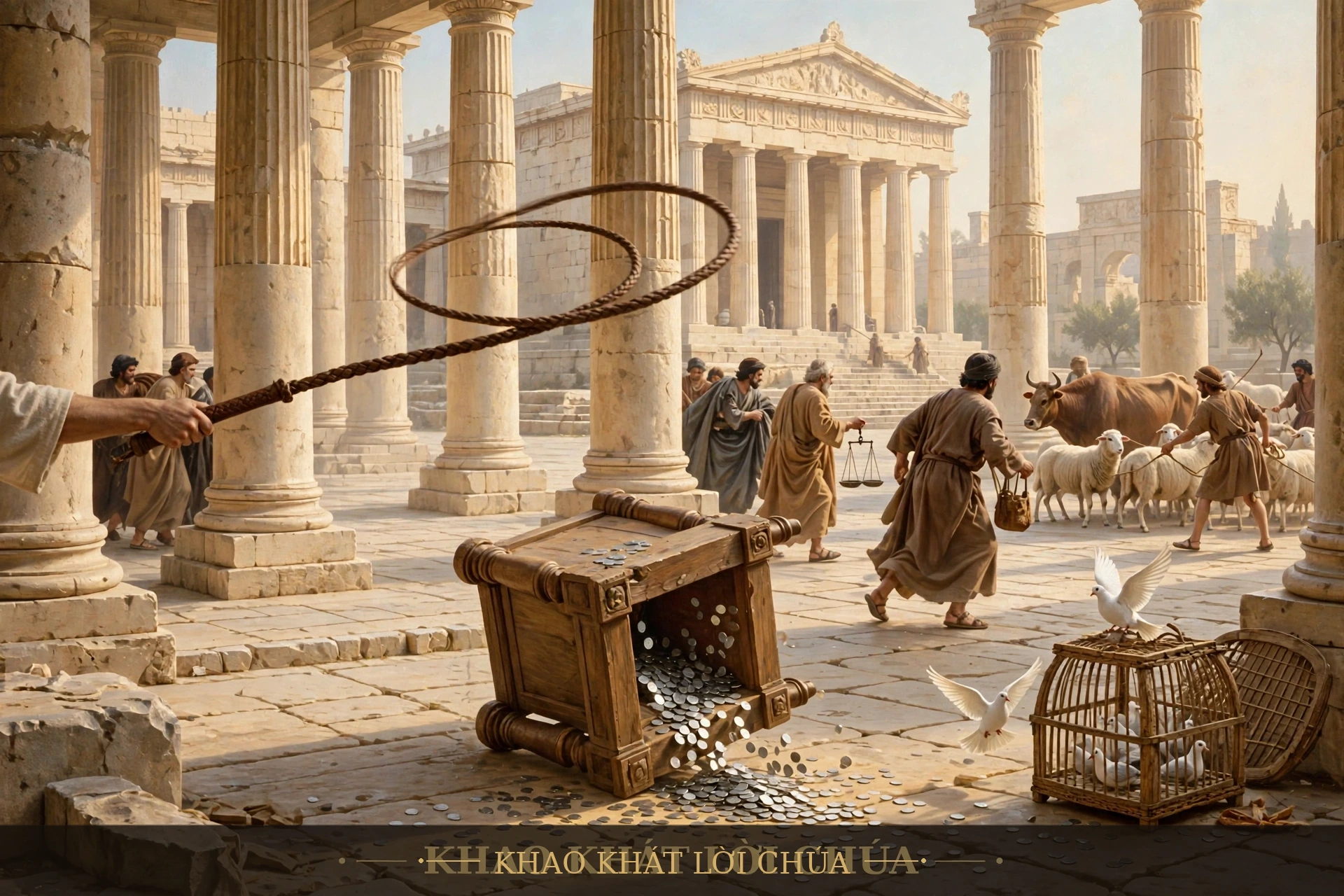
Tin Mừng Chúa Giê-su Ki-tô theo thánh Gio-an. Gần đến lễ Vượt Qua của người Do-thái, Đức Giê-su lên thành Giê-ru-sa-lem. Người thấy trong Đền Thờ có những kẻ bán chiên, bò, bồ câu, và những người đang ngồi đổi tiền. Người liền lấy dây làm roi mà xua đuổi tất cả chiên cũng như bò, ra khỏi Đền Thờ; còn tiền của những người đổi bạc, Người đổ tung ra, và lật nhào bàn ghế của họ. Người nói với những kẻ bán bồ câu: “Đem tất cả những thứ này ra khỏi đây, đừng biến nhà Cha tôi thành nơi buôn bán.” Các môn đệ của Người nhớ lại lời đã chép trong Kinh Thánh: Vì nhiệt tâm lo việc nhà Chúa, mà tôi đây sẽ phải thiệt thân.
Người Do-thái hỏi Đức Giê-su: “Ông lấy dấu lạ nào chứng tỏ cho chúng tôi thấy là ông có quyền làm như thế?” Đức Giê-su đáp: “Các ông cứ phá huỷ Đền Thờ này đi; nội ba ngày, tôi sẽ xây dựng lại.” Người Do-thái nói: “Đền Thờ này phải mất bốn mươi sáu năm mới xây xong, thế mà nội trong ba ngày ông xây lại được sao?” Nhưng Đền Thờ Đức Giê-su muốn nói ở đây là chính thân thể Người. Vậy, khi Người từ cõi chết trỗi dậy, các môn đệ nhớ lại Người đã nói điều đó, họ tin vào Kinh Thánh và lời Đức Giê-su đã nói.
Ngày 9 tháng 11, cả Giáo Hội mừng lễ của một ngôi nhà thờ.
Đó là Đền thờ La-tê-ra-nô ở Rô-ma, nhà thờ chính tòa của Đức Giáo Hoàng. Trên mặt tiền còn khắc dòng chữ: mẹ và đầu của mọi nhà thờ trong thành Rô-ma và trên khắp thế giới.
Vậy mà bài Tin Mừng của ngày lễ ấy lại kể chuyện Chúa Giê-su đứng giữa một đền thờ và lật nhào những chiếc bàn.
Gần lễ Vượt Qua, Ngài lên Giê-ru-sa-lem. Trong khuôn viên Đền Thờ, người ta bán bò, chiên, bồ câu, và ngồi đổi tiền.
Chuyện mua bán ấy đâu hoàn toàn vô lý. Khách hành hương từ xa về cần mua con vật để dâng lễ, cần đổi tiền để nộp thuế Đền Thờ.
Nhưng Chúa Giê-su bện dây làm roi. Ngài xua hết chiên bò ra ngoài, đổ tung tiền của những người đổi bạc, lật nhào bàn của họ. Rồi Ngài nói: Đem tất cả những thứ này ra khỏi đây, đừng biến nhà Cha tôi thành nơi buôn bán.
Nhà Cha tôi.
Những việc vốn để giúp con người thờ phượng Thiên Chúa đã dần chiếm lấy chỗ dành cho việc gặp gỡ Ngài. Người ta vẫn đến Đền Thờ. Vẫn có lễ vật. Vẫn giữ đúng nghi thức. Chỉ có điều giữa bao nhiêu tiếng mua bán và tính toán, chẳng còn chỗ cho một tâm hồn lặng xuống trước mặt Thiên Chúa.
Chúa Giê-su không lật đổ Đền Thờ. Ngài lật đổ những chiếc bàn đã chiếm mất chỗ của Thiên Chúa.
Người Do Thái hỏi Chúa lấy quyền gì làm thế. Chúa đáp: Các ông cứ phá Đền Thờ này đi, nội ba ngày tôi sẽ xây dựng lại.
Họ cười. Đền Thờ này xây mất bốn mươi sáu năm. Ba ngày sao xây nổi.
Trong nguyên bản Hy Lạp, thánh Gio-an dùng hai chữ khác nhau cho “đền thờ”. Khi kể chuyện Chúa đuổi người buôn bán, ngài dùng chữ chỉ cả khuôn viên rộng lớn, có sân, có cổng, có hành lang. Khi Chúa nói “các ông cứ phá Đền Thờ này đi”, chữ ấy lại chỉ cung thánh, nơi thâm nghiêm nhất, nơi Thiên Chúa ngự.
Và thánh Gio-an giải thích: Ngài nói về Đền Thờ là chính thân thể Ngài.
Nơi Thiên Chúa ngự giờ là một con người. Người ta sẽ phá nát thân thể ấy trên thập giá, và ba ngày sau, Ngài sống lại.
Trong bài đọc thứ hai, thánh Phao-lô viết: anh em là Đền Thờ của Thiên Chúa, và Thánh Thần Thiên Chúa ngự trong anh em.
Vậy trong lòng mỗi người cũng có một cung thánh. Và chung quanh nó, có khi cũng kê đầy những chiếc bàn.
Mình vẫn đọc kinh mỗi ngày, nhưng tâm trí chỉ nghĩ đến những việc chưa xong. Ngay cả những việc mình làm để phục vụ Chúa cũng có lúc trở thành nơi mình tìm sự công nhận cho bản thân.
Những chiếc bàn ấy đâu xuất hiện trong một ngày. Chúng được đặt vào lòng mình từng chút một, rồi ở đó lâu đến mức mình tưởng chúng vốn thuộc về nơi ấy.
Có khi Chúa phải lật một cái bàn. Một kế hoạch đổ vỡ, một biến cố làm mọi thứ ngổn ngang. Lúc ấy mình thấy như bị phá.
Nhưng Chúa Giê-su lật bàn trong Đền Thờ vì Ngài yêu mến nhà Cha. Nếu có ngày Ngài xáo trộn những điều mình đã quá quen, có lẽ cũng vì Ngài thương mình, và đang dọn chỗ.
Một tâm hồn đẹp trước mặt Chúa có khi là tâm hồn từng ngổn ngang nhất, nhưng đã dám để Chúa bước vào, chạm tới những điều mình không muốn đổi, rồi bắt đầu sắp xếp lại.
Câu cuối của bài Tin Mừng kể rằng khi Chúa sống lại, các môn đệ nhớ lại lời Ngài, và họ tin. Lúc đứng giữa những chiếc bàn bị lật, họ chưa hiểu gì.
Tuần này, nếu có dịp ghé nhà thờ, thử đến sớm năm phút, ngồi yên trước Nhà Tạm và hỏi Chúa: chiếc bàn nào trong lòng con, Chúa muốn dọn đi?
Và nếu có lúc đời mình như vừa bị lật tung, hãy nhớ những môn đệ hôm ấy.
Ba ngày sau, họ mới hiểu.
“Lạy Chúa, xin dọn lòng con thành nhà của Cha.”
Lời nguyện
Lạy Chúa Giê-su,
Có những điều đã ở trong lòng chúng con quá lâu, đến nỗi chúng con không còn nhận ra chúng đang làm mình xa Chúa.
Xin cho chúng con biết mở cửa tâm hồn, để Chúa bước vào và dọn đi những gì đã chiếm chỗ của Chúa.
Xin giúp chúng con trân trọng ngôi thánh đường nơi mình đến cầu nguyện, và gìn giữ đền thờ Chúa đã dựng nên trong chính lòng mình.
Và như dòng nước chảy ra từ Đền Thờ trong thị kiến của ngôn sứ Ê-dê-ki-en, xin cho ơn Chúa từ lòng chúng con tuôn chảy đến những người chung quanh.
Amen.
Bài Phúc Âm
The Gospel of Jesus Christ according to John. Since the Passover of the Jews was near, Jesus went up to Jerusalem. He found in the temple area those who sold oxen, sheep, and doves, as well as the money-changers seated there. He made a whip out of cords and drove them all out of the temple area, with the sheep and oxen, and spilled the coins of the money-changers and overturned their tables, and to those who sold doves he said, “Take these out of here, and stop making my Father’s house a marketplace.” His disciples recalled the words of scripture, “Zeal for your house will consume me.”
At this the Jews answered and said to him, “What sign can you show us for doing this?” Jesus answered and said to them, “Destroy this temple and in three days I will raise it up.” The Jews said, “This temple has been under construction for forty-six years, and you will raise it up in three days?” But he was speaking about the temple of his body. Therefore, when he was raised from the dead, his disciples remembered that he had said this, and they came to believe the scripture and the word Jesus had spoken.
On November 9, the whole Church celebrates the feast of a church building.
It is the Basilica of St. John Lateran in Rome, the cathedral church of the Pope. On its facade are carved the words: mother and head of all churches in the city of Rome and throughout the world.
And yet the Gospel of that feast tells of Jesus standing in the middle of a temple and overturning the tables.
As the Passover drew near, he went up to Jerusalem. In the temple courts, people were selling cattle, sheep, and doves, and sitting there changing money.
That buying and selling was not entirely unreasonable. Pilgrims coming from far away needed to buy an animal to offer in sacrifice, and needed to change money to pay the temple tax.
But Jesus made a whip out of cords. He drove all the sheep and cattle out, spilled the money of the money-changers, and overturned their tables. Then he said: Take all this out of here, and stop making my Father's house a marketplace.
My Father's house.
The things meant to help people worship God had gradually taken over the place meant for meeting him. People still came to the temple. There were still offerings. The rituals were still kept. Only, amid all the noise of buying and selling and calculating, there was no longer room for a soul to grow quiet before God.
Jesus did not overturn the temple. He overturned the tables that had taken God's place.
The Jews asked him by what authority he did this. He answered: Destroy this temple, and in three days I will raise it up.
They laughed. This temple took forty-six years to build. How could it be raised in three days?
In the original Greek, Saint John uses two different words for 'temple.' When he tells of Jesus driving out the merchants, he uses the word for the whole vast precinct, with its courtyards, gates, and colonnades. When Jesus says, 'Destroy this temple,' the word means the sanctuary itself, the most sacred place, where God dwells.
And Saint John explains: he was speaking of the temple of his body.
Where God dwells is now a person. People would break that body on the cross, and three days later, he would rise again.
In the second reading, Saint Paul writes: you are the temple of God, and the Spirit of God dwells in you.
So in each person's heart there is also a sanctuary. And around it, there are sometimes tables set up everywhere.
I still pray every day, but my mind only thinks of the things left undone. Even the things I do to serve God can sometimes become the place where I look for recognition for myself.
Those tables did not appear in a single day. They were set in my heart little by little, and stayed there so long that I came to think they had always belonged there.
Sometimes the Lord has to overturn a table. A plan falls apart, an event leaves everything in disarray. At that moment it feels as though I am being torn down.
But Jesus overturned the tables in the temple because he loved his Father's house. If one day he disturbs the things I have grown too used to, perhaps it is because he loves me, and is making room.
A heart beautiful before God is sometimes the heart that was once the most disheveled, but dared to let the Lord come in, to touch the things it did not want to change, and then to begin putting things in order.
The last line of the Gospel says that when Jesus rose again, the disciples remembered his words, and they believed. Standing amid the overturned tables, they understood nothing.
This week, if you have a chance to stop by church, try coming five minutes early, sitting quietly before the Tabernacle and asking the Lord: which table in my heart do you want to clear away?
And if there is a time when your life feels as though it has just been turned upside down, remember the disciples that day.
Three days later, they understood.
'Lord, make my heart the house of the Father.'
Prayer
Lord Jesus,
There are things that have been in our hearts for so long that we no longer recognize them as keeping us far from you.
Grant that we may open the door of our hearts, so that you may come in and clear away what has taken your place.
Help us to cherish the holy church where we come to pray, and to guard the temple you have built within our own hearts.
And as the water flowing from the temple in the vision of the prophet Ezekiel, may your grace flow from our hearts to the people around us.
Amen.