Tiệc cưới (Mt 22, 1-14)
The Wedding Banquet (Mt 22:1-14)
Bài Phúc Âm
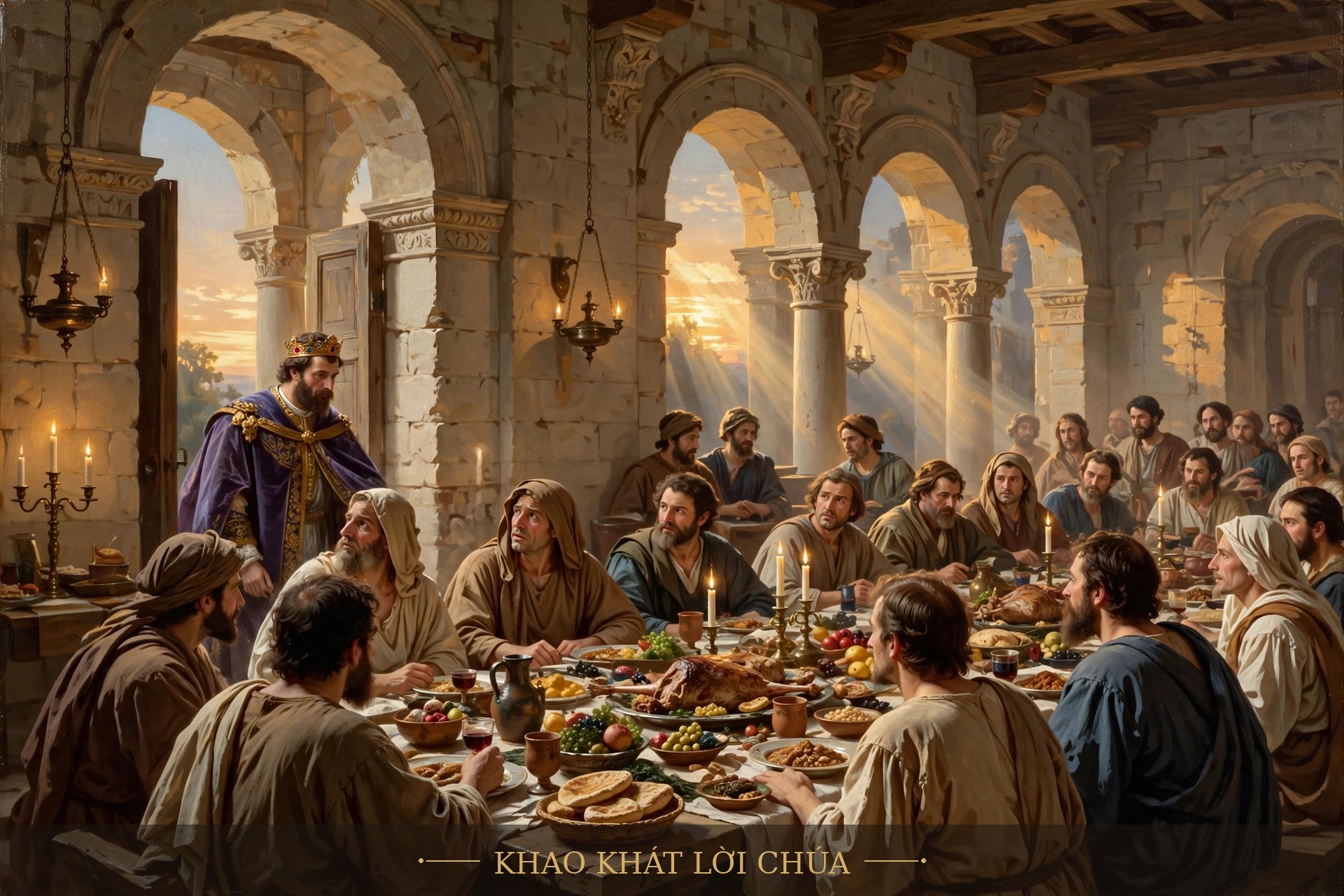
Tin Mừng Chúa Giê-su Ki-tô theo thánh Mát-thêu. Khi ấy, Đức Giê-su lại dùng dụ ngôn mà nói với các thượng tế và kỳ mục trong dân rằng: Nước Trời cũng giống như chuyện một vua kia mở tiệc cưới cho con mình. Nhà vua sai đầy tớ đi thỉnh các quan khách đã được mời trước, xin họ đến dự tiệc, nhưng họ không chịu đến.
Nhà vua lại sai những đầy tớ khác đi, và dặn họ: Hãy thưa với quan khách đã được mời rằng: Này cỗ bàn, ta đã dọn xong, bò tơ và thú béo đã hạ rồi, mọi sự đã sẵn. Mời quý vị đến dự tiệc cưới! Nhưng quan khách không thèm đếm xỉa tới, lại bỏ đi: kẻ thì đi thăm trại, người thì đi buôn, còn những kẻ khác lại bắt các đầy tớ của vua mà sỉ nhục và giết chết.
Nhà vua liền nổi cơn thịnh nộ, sai quân đi tru diệt bọn sát nhân ấy và thiêu huỷ thành phố của chúng. Rồi nhà vua bảo đầy tớ: Tiệc cưới đã sẵn sàng rồi, mà những kẻ đã được mời lại không xứng đáng. Vậy các ngươi đi ra các ngả đường, gặp ai cũng mời hết vào tiệc cưới.
Đầy tớ liền đi ra các nẻo đường, gặp ai, bất luận xấu tốt, cũng tập hợp cả lại, nên phòng tiệc cưới đã đầy thực khách. Bấy giờ nhà vua tiến vào quan sát khách dự tiệc, thấy ở đó có một người không mặc y phục lễ cưới, mới hỏi người ấy: Này bạn, làm sao bạn vào đây mà lại không có y phục lễ cưới? Người ấy câm miệng không nói được gì.
Nhà vua liền bảo những người phục dịch: Trói chân tay nó lại, quăng nó ra chỗ tối tăm bên ngoài, ở đó người ta sẽ phải khóc lóc nghiến răng! Vì kẻ được gọi thì nhiều, mà người được chọn thì ít.
Tiệc cưới
*Chúa Nhật, 11/10/2026, Chúa Nhật 28 Thường Niên, năm A. Tin Mừng: Mt 22,1-14.*
Bối cảnh
Bạn đã bao giờ nhận thiệp cưới, nhận lời rồi, đến hôm ấy lại thôi, bận quá? Dụ ngôn hôm nay bắt đầu từ chính chỗ ấy, nhưng đẩy đi xa hơn nhiều.
Lời mời dự tiệc lớn thời ấy thường đến theo hai nhịp. Trước là báo cho khách biết để sắp xếp. Sau là đầy tớ đến tận nơi thỉnh khách khi cỗ đã dọn xong. Trong dụ ngôn, lời mời trước được ngầm hiểu qua cụm "những quan khách đã được mời trước". Rồi vua thỉnh đến hai lần. Lần đầu, họ không chịu đến. Lần hai, vua sai những đầy tớ khác, lần này còn kể ra thực đơn: bò tơ đã hạ, thú béo đã làm thịt, mọi sự đã sẵn sàng. Mời rồi, thỉnh rồi, lại thỉnh nữa. Sự kiên nhẫn của nhà vua là điều đầu tiên đáng ngạc nhiên.
Đức Giê-su kể dụ ngôn này cho các thượng tế và kỳ mục trong dân, ngay sau hai dụ ngôn đã khiến họ nhận ra Người đang nói về họ. Cộng đoàn của Mát-thêu nghe đến đoạn thành bị thiêu có lẽ rùng mình, vì ký ức thành Giê-ru-sa-lem bị thiêu rụi năm bảy mươi vẫn còn nóng hổi trong lòng họ.
Đi sâu vào chi tiết
Nhưng họ không thèm đếm xỉa. Kẻ thì đi thăm trại, người thì đi buôn. Họ có việc thật. Tội của họ trước hết là thờ ơ, coi nhẹ lời mời, xếp tiệc của vua xuống dưới ruộng nương và cửa hàng của mình. Với một ông vua, khi cỗ đã dọn mà khách khước từ, đó là sự sỉ nhục công khai, gần như khi quân.
Rồi có những kẻ đi xa hơn: bắt các đầy tớ của vua mà sỉ nhục và giết chết. Vua nổi thịnh nộ, sai quân tru diệt bọn sát nhân và thiêu huỷ thành phố của chúng.
Nói cho công bằng, đây là cách cộng đoàn Mát-thêu nghe câu chuyện. Vị vua gợi nhớ Thiên Chúa, lớp đầy tớ đầu gợi nhớ các ngôn sứ, lớp đầy tớ sau gợi nhớ các tông đồ và những nhà truyền giáo. Đừng vội lấy từng chi tiết chiến tranh để vẽ chân dung Thiên Chúa. Và cũng đừng đọc dụ ngôn như lời kết án cả một dân tộc. Dụ ngôn nhắm vào giới lãnh đạo đang khước từ Đức Giê-su. Mũi nhọn của câu chuyện, như ta sẽ thấy, quay về phía những người đang ngồi trong tiệc, tức là chúng ta.
Và đây là chỗ lạ nhất: sau khi thành bị thiêu, tiệc cưới vẫn sẵn sàng. Phán xét không hủy bàn tiệc. Vua bảo đầy tớ ra các ngả đường, gặp ai cũng mời. Đầy tớ đi, gặp ai bất luận xấu tốt cũng tập hợp lại. Để ý thứ tự trong nguyên văn: xấu đứng trước tốt. Phòng tiệc là một cộng đoàn pha trộn, và sự phân định thuộc về vua, đến vào lúc cuối. Bài đọc một hôm nay, ngôn sứ I-sai-a đã loan báo chân trời ấy từ ngàn xưa: Thiên Chúa dọn tiệc cho muôn dân, cho mọi dân tộc. Một bữa tiệc vui, chứ không phải một phiên tòa.
Nhưng chính giữa niềm vui ấy, nhà vua tiến vào. Ông bước vào để vui với khách, rồi khựng lại trước một người không mặc y phục lễ cưới. Ông hỏi: Này bạn, làm sao bạn vào đây mà lại không có y phục lễ cưới?
Chữ "bạn" này Mát-thêu dùng đúng ba lần. Một là ông chủ vườn nho nói với người thợ cằn nhằn. Hai là nhà vua nói với vị khách này. Ba là Đức Giê-su nói với Giu-đa tại Ghết-sê-ma-ni. Cả ba lần, người được gọi là "bạn" đều đang ở bên trong, và cả ba lần đều là một cuộc đối chất. Đó không phải lời âu yếm.
Tin Mừng không kể vì sao người này thiếu áo cưới, và bản văn cũng không cho ta biết thêm. Điều bản văn cho ta chỉ là: anh ta đã ở trong phòng tiệc, bị hỏi, và câm miệng. Sự im lặng của người khách không phải vì rụt rè. Đó là sự im lặng của người hết lý lẽ.
Trong truyền thống Hội Thánh, chiếc áo cưới được đọc theo nhiều cách: áo trắng ngày rửa tội, việc lành công chính như sách Khải Huyền nói đến, "mặc lấy Đức Ki-tô" như thư Rô-ma viết. Thánh Augustinô và thánh Grê-gô-ri-ô Cả cùng quy về một mối: đức ái. Điểm đáng sợ không phải anh ta đứng ngoài cửa. Điểm đáng sợ là anh ta đã ngồi trong tiệc rồi mà vẫn thiếu điều cốt lõi nhất.
Rồi câu kết: kẻ được gọi thì nhiều, mà người được chọn thì ít. Phòng tiệc đầy khách mà chỉ một người bị loại. Nếu hiểu "được chọn thì ít" theo nghĩa con số thì chẳng khớp gì với câu chuyện. Đây là lời cảnh tỉnh chống lại sự tự mãn của người đã nhận lời mời, chứ không phải bảng thống kê số người được cứu.
Nhìn lại mình
Chúa Nhật nào ta cũng nghe lại lời mời của nhà vua, ngay trước khi lên rước lễ: Phúc cho ai được mời đến dự tiệc Chiên Thiên Chúa. Câu hỏi không phải là tôi có mặt hay không, vì tôi đang ở đây rồi. Câu hỏi là: khi Vua bước vào và nhìn tôi, Ngài có thấy chiếc áo của tình yêu không, hay chỉ thấy một người đã đến mà chưa thật sự dự tiệc?
Cầu nguyện
Lạy Chúa Giê-su, con cảm ơn Chúa vì hôm nay Chúa lại mời con dự tiệc. Xin mặc cho con chiếc áo của tình yêu, để khi Chúa bước vào, Chúa thấy một người đã đến và thật sự dự tiệc. Xin cho đức ái con nhận nơi bàn tiệc này theo con về nhà, đến với những người con gặp hôm nay.
Sống Lời Chúa hôm nay
Hôm nay, hãy mặc "chiếc áo của tình yêu" bằng một việc cụ thể: chủ động làm hòa với một người trong nhà, hoặc dành sự tử tế cho một người bạn thường khó ưa.
Bài Phúc Âm
The Gospel of Jesus Christ according to Matthew. Jesus again in reply spoke to them in parables, saying, "The kingdom of heaven may be likened to a king who gave a wedding feast for his son. He dispatched his servants to summon the invited guests to the feast, but they refused to come.
A second time he sent other servants, saying, 'Tell those invited: "Behold, I have prepared my banquet, my calves and fattened cattle are killed, and everything is ready; come to the feast."' Some ignored the invitation and went away, one to his farm, another to his business. The rest laid hold of his servants, mistreated them, and killed them.
The king was enraged and sent his troops, destroyed those murderers, and burned their city. Then he said to his servants, 'The feast is ready, but those who were invited were not worthy to come. Go out, therefore, into the main roads and invite to the feast whomever you find.'
The servants went out into the streets and gathered all they found, bad and good alike, and the hall was filled with guests. But when the king came in to meet the guests he saw a man there not dressed in a wedding garment. He said to him, 'My friend, how is it that you came in here without a wedding garment?' But he was reduced to silence.
Then the king said to his attendants, 'Bind his hands and feet, and cast him into the darkness outside, where there will be wailing and grinding of teeth.' Many are invited, but few are chosen."
The Wedding Banquet
*Sunday, 10/11/2026, 28th Sunday in Ordinary Time, Year A. Gospel: Mt 22:1-14.*
Background
Have you ever received a wedding invitation, said yes, and then on the day simply thought: too busy? Today's parable begins right there, but it goes much further.
A grand invitation in those days usually came in two stages. First, guests were told in advance so they could make arrangements. Then, when everything was ready, servants were sent to escort them in. In the parable, the advance invitation is implied by the phrase "the invited guests." Then the king summons them twice. The first time, they refuse to come. The second time, he sends other servants, this time even listing the menu: the banquet prepared, calves and fattened cattle killed, everything ready. Invited, summoned, summoned again. The king's patience is the first surprising thing.
Jesus tells this parable to the chief priests and elders, right after two parables in which they already recognized he was speaking about them. Matthew's community, hearing about the burned city, would have shuddered: the memory of Jerusalem burned in the year 70 was still fresh in their hearts.
Going deeper
But they ignored the invitation. One went to his farm, another to his business. They had real work to do. Their sin was first of all indifference: shrugging off the invitation, ranking the king's feast below their fields and their shops. For a king, when the banquet is ready and the guests refuse, that is a public insult, almost treason.
Then some went further: they seized the king's servants, mistreated them, and killed them. The king was enraged and sent his troops to destroy those murderers and burn their city.
To be fair, this is how Matthew's community heard the story. The king recalls God; the first group of servants recalls the prophets; the second, the apostles and Christian missionaries. Do not rush to paint God's portrait from every military detail. Nor should the parable be read as condemning an entire people. It is aimed at the leaders who were rejecting Jesus. The sharp edge of the story, as we shall see, turns toward those already seated at the feast — that is, toward us.
And here is the strangest part: after the city burns, the wedding feast is still ready. Judgment does not cancel the banquet. The king tells his servants to go out to the roads and invite everyone they find. They go, and gather all they find, bad and good alike. Notice the order in the original text: bad comes before good. The banquet hall is a mixed community, and the sorting belongs to the king, at the end. Today's first reading, Isaiah, proclaimed this horizon long ago: God prepares a feast for all peoples, for every nation. A joyful banquet, not a courtroom.
But right in the middle of that joy, the king enters. He comes in to rejoice with his guests, then stops before a man not dressed in a wedding garment. He asks: "My friend, how is it that you came in here without a wedding garment?"
Matthew uses this word "friend" exactly three times. Once, the landowner says it to the grumbling worker. Twice, the king says it to this guest. Three times, Jesus says it to Judas at Gethsemane. All three times, the one called "friend" is on the inside, and all three times it opens a confrontation. This is no term of endearment.
The Gospel does not say why this man lacks a wedding garment, and the text tells us no more. What the text gives us is this: he was inside the banquet hall, he was questioned, and he was reduced to silence. The guest's silence is not shyness. It is the silence of one who has run out of excuses.
In the Church's tradition, the wedding garment has been read in many ways: the white robe of baptism, the good deeds of righteousness spoken of in Revelation, "putting on Christ" as Romans says. Saint Augustine and Saint Gregory the Great converge on one meaning: charity. The frightening thing is not that he stood outside the door. The frightening thing is that he was already seated at the feast, yet lacked the one essential thing.
Then the closing line: many are invited, but few are chosen. The hall is full, yet only one is cast out. If we read "few are chosen" as a headcount, it does not fit the story at all. This is a warning against the complacency of those who have accepted the invitation, not a statistic of salvation.
Look at yourself
Every Sunday we hear the king's invitation once more, just before Communion: blessed are those called to the supper of the Lamb. The question is not whether I showed up — I am already here. The question is: when the King enters and looks at me, will he see the garment of love, or only someone who came without truly joining the feast?
Prayer
Lord Jesus, thank you for inviting me to the feast once again today. Clothe me in the garment of love, so that when you enter, you find someone who came and truly joined the feast. May the charity I receive at this table follow me home, to everyone I meet today.
Living the Word today
Today, put on the "garment of love" in one concrete act: take the initiative to make peace with someone in your household, or show kindness to someone you usually find difficult.